
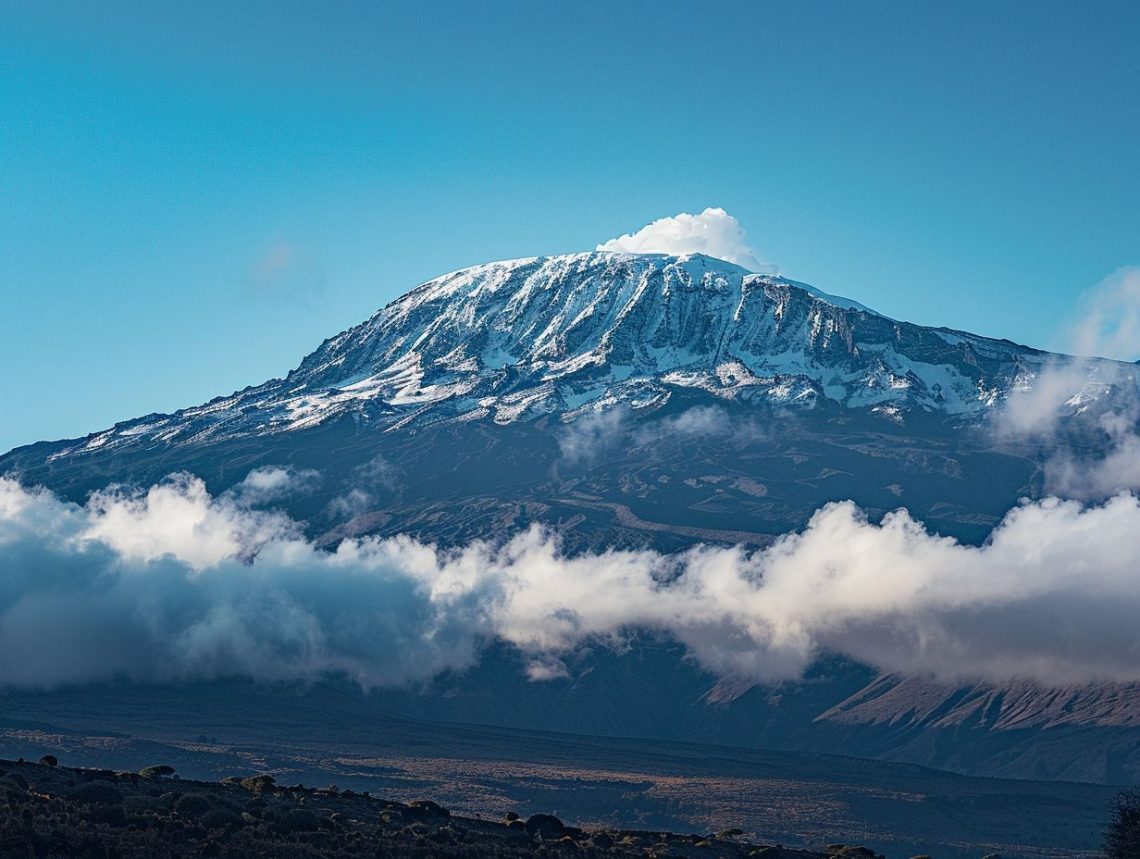
Standing tall at 5,895 meters (19,341 feet) above sea level, Mount Kilimanjaro is Africa’s highest peak and one of the most sought-after hiking destinations in the world. Hiking Mountain Kilimanjaro is a dream for adventurers, offering not only a physical challenge but also an unforgettable journey through diverse ecosystems, from lush rainforests to alpine deserts and finally, the icy summit. The ultimate reward? Reaching Uhuru Peak, the highest point on Kilimanjaro’s crater rim, where trekkers are greeted with breathtaking panoramic views and an overwhelming sense of accomplishment.
Mount Kilimanjaro is a dormant volcano with three distinct peaks: Kibo, Mawenzi, and Shira. Kibo, the tallest, is where Uhuru Peak is located and is the primary goal for most climbers. Mawenzi, the second-highest peak, is a rugged and technical climb reserved for experienced mountaineers, while Shira, the oldest and smallest, is now a plateau rather than a standalone peak. Each of these peaks contributes to Kilimanjaro’s majestic presence, but it is Uhuru Peak that draws thousands of hikers each year, eager to stand on the “Roof of Africa.”
The journey to the summit is as varied as the landscapes themselves, with several routes offering different experiences in terms of difficulty, scenery, and acclimatization. Among the most popular are the Marangu, Machame, and Lemosho routes, each providing a unique adventure for those hiking Mountain Kilimanjaro. Whether you prefer the relative comfort of hut accommodations on Marangu, the scenic beauty of Machame, or the remote wilderness of Lemosho, there’s a path that suits every trekker’s preference.
The Three Peaks of Kilimanjaro
Before delving into the routes, it’s essential to understand Kilimanjaro’s three peaks:
- Kibo (5,895m): The highest and most iconic, featuring Uhuru Peak, the ultimate goal for climbers. Its snow-capped summit is a striking sight, though glaciers have been receding over the years. The ascent to Kibo involves navigating the steep slopes of the crater rim, with the final push often done at night under a star-filled sky.
- Mawenzi (5,149m): The second-highest peak, known for its jagged, rocky terrain. Unlike Kibo, Mawenzi requires technical climbing skills and is rarely summited by casual hikers. However, it offers stunning views for those trekking nearby routes.
- Shira (3,962m): Once a towering peak, Shira collapsed millennia ago, forming a vast plateau. Though no longer a standalone summit, it serves as a key landmark on the western side of the mountain, offering expansive views and unique flora.
Popular Routes to Uhuru Peak
-
Marangu Route (The “Coca-Cola” Route)
Known as the easiest and most traditional path, the Marangu Route is the only one offering hut accommodations instead of tents. Dubbed the “Coca-Cola” route due to its historical reputation as the most accessible, it spans five to six days and features a steady but steep climb.
- Pros: Comfortable sleeping huts, well-maintained trails, and a straightforward ascent.
- Cons: Lower success rates due to shorter acclimatization time. The descent follows the same path, making it less scenic.
-
Machame Route (The “Whiskey” Route)
The Machame Route is the most popular choice for those hiking Mountain Kilimanjaro, famed for its stunning scenery and higher success rates. Taking six to seven days, it’s nicknamed the “Whiskey” route for its tougher challenge compared to Marangu.
- Pros: Varied landscapes, excellent acclimatization, and a more adventurous trail.
- Cons: Steeper and more physically demanding, with camping as the only accommodation option.
-
Lemosho Route (The Scenic Wilderness Path)
For those seeking a remote and less crowded experience, the Lemosho Route is ideal. Starting on Kilimanjaro’s western side, it merges with the Machame Route after a few days and takes seven to eight days, allowing for optimal acclimatization.
- Pros: Low traffic, breathtaking views, and high summit success rates.
- Cons: Longer duration and higher cost due to its remote starting point.
The Summit Push to Uhuru Peak
No matter which route you choose, the final ascent to Uhuru Peak is a grueling yet rewarding experience. Most climbers begin the push around midnight, trekking under the glow of headlamps through the freezing darkness. The thin air at this altitude makes every step a challenge, but as dawn breaks, the sight of the sun rising over the African plains is nothing short of magical.
Standing at Uhuru Peak, surrounded by glaciers and endless skies, is a moment of pure triumph. The sense of achievement, coupled with the stunning vistas, makes every hardship worthwhile.
Conclusion: Ready to Conquer Kilimanjaro?
Hiking Mountain Kilimanjaro is a life-changing adventure, offering not just a physical test but also a deep connection with nature. Whether you choose the Marangu, Machame, or Lemosho route, each step brings you closer to the unforgettable experience of standing atop Africa’s highest point.
If you’re ready to embark on this incredible journey, we can help make it happen! Our team specializes in organizing unforgettable treks to Kilimanjaro, as well as other breathtaking adventures across Tanzania, Kenya, and Rwanda. From wildlife safaris to gorilla trekking, we’ve got your dream expedition covered. Contact us today and start planning your ultimate African adventure