
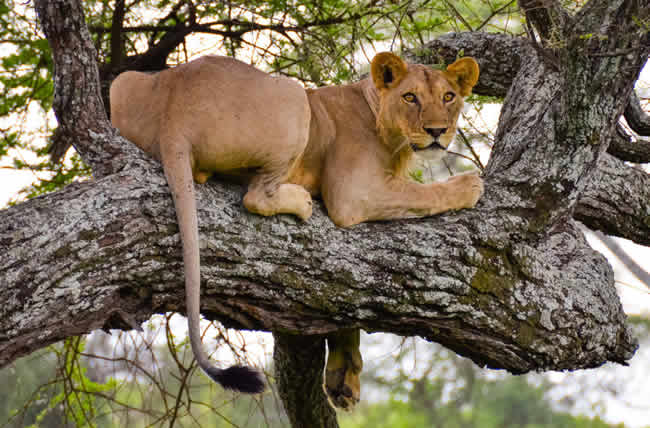
Queen Elizabeth National Park is the one of most popular national parks in Uganda. The park is famous for being a home to the tree-climbing lions in Ishasha region of the park as well as several other wildlife. The park is found in the western region of Uganda in the districts of Kasese, Kamwenge, Rubirizi and Rukungiri. The park also lies in the western arm of the Great Rift Valley. Queen Elizabeth National Park is 1,978 square kilometers wide and it is bisected by the 00 degrees’ latitude equator. The park is home to over 95 wildlife species and approximately 600 bird species.
Queen Elizabeth National Park is also one of the oldest national parks. It was formerly known as Kazinga Channel National Park established in 1952 but later changed to Queen Elizabeth National Park. This is to honor the visit of Her Majesty the Queen of England Queen Elizabeth II to the park in 1954.
What to expect while in Queen Elizabeth National Park
Queen Elizabeth National Park has a lot to offer when it comes to expectations while on a safari experience in Uganda.
Tree-climbing Lions
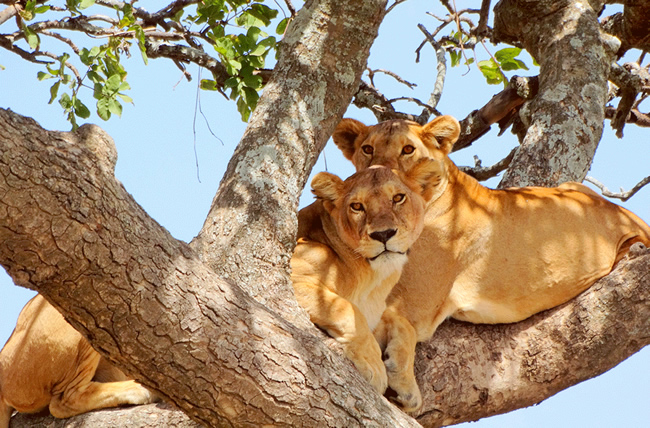
Tree-climbing lions at Ishasha region of the park are a trademark of the entire park. These lions are the major attraction of Queen Elizabeth National Park. These tree-climbing lions are only found in a few places in the world and Queen Elizabeth National Park is privileged to be part of them. These lions developed the tree-climbing habit as a way of escaping the irritation and biting of the ground insects. While on a game drive, the lions can usually be spotted high up the fig tree branches resting.
Chimpanzees
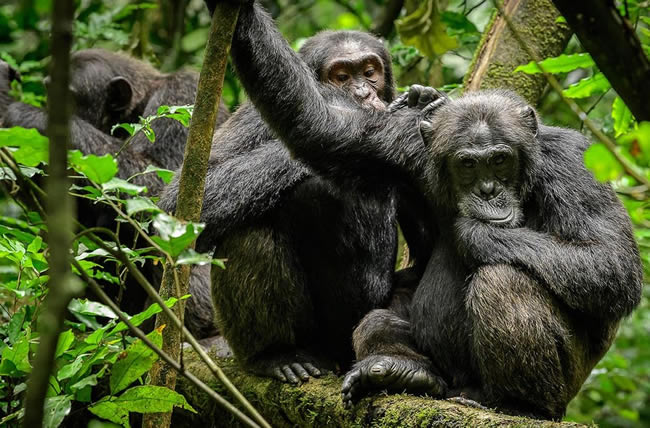
Chimpanzees in Queen Elizabeth National Park are found in the Kyambura gorge. Kyambura gorge is a rich with a thick vegetation and tropical rainforest that a nature habitat for the chimps. The gorge is also irrigated by River Kyambura and is the main water source not only for the chimpanzees but also other wildlife species in the gorge. Kyambura gorge is well equipped with for harboring these primates thus the name “the valley of Apes”
Bird species
Queen Elizabeth National Park is also a popular bird haven for over 600 bird species. These birds can be spotted across different parts of the park. The bird species in Queen Elizabeth National Park are also a major attraction in the park. The bird species in Queen Elizabeth National Park range from residents to migratory birds that fly in the park from as far as Europe and Asia. Some the areas like the maramagambo forest area offer the best habitat for these birds. Some of the bird species in the park include the following knob billed duck, African jacana, African mustached warbler, African emerald cuckoo, black coucal, yellow bill, African fin foot, yellow wagtail, shoebill, sacred ibis to mention but a few.
Kazinga Channel
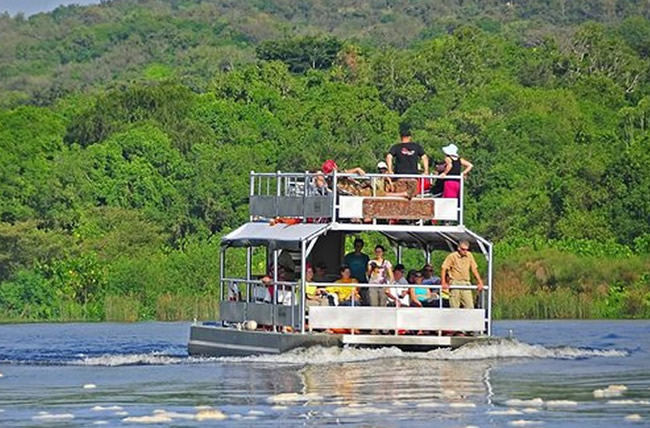
Kazinga Channel is one of the best attractions in Queen Elizabeth National Park. The Kazinga channel is a water body the connects Lake Edward and Lake George. Queen Elizabeth National Park was originally named after this water body after it had attained the national park status in 1952. Kazinga channel is one of the main water sources of Queen Elizabeth National Park. It is also a natural habitat for marine species like the Nile crocodiles and fish like the Nile perch as well as hippos.
The channel also hosts a number of wildlife animals and birds on the shores that come for a drink and also hunt for small fish. Some of these bird species include Squacco herons, knob billed ducks pied kingfisher, wattled plovers, African fish eagle, spur winged plovers to mention but a few. You will surely have a thrilling and adventurous moment when you visit the Kazinga channel while on your safari tour.
What to do in Queen Elizabeth National Park
Queen Elizabeth National Park offers a lot of different activities to engage in while on your Ugandan safari experience. These activities are not only adventurous and fun but as well as educational. Some of the activities include the following;
Lion tracking
During this activity, lions are tracked for the purpose of mainly research and leisure. Lion tracking takes place in Kasenyi and Ishasha regions of the park. Tree-climbing lions are mainly tracked for the purposes of research on the unique behavior of the climbing trees. Radio collars attached on some of the lions have made it easy for these lions to be tracked.
Game drives
This is also the major activity in Queen Elizabeth National Park. Game drives involve viewing of the animals and getting up close to them in the comfort of your vehicle. Game drives are the best time to view the tree climbing lions hanging on branches of fig and cactus trees, elephants and other wildlife species grazing in the open savannah plains. Some of the common animals to spot while on a game drive are elephants, buffaloes, Uganda Kob, warthogs, hyenas, leopards, oribis, among others.
Chimpanzee trekking
Trekking of chimpanzee is an adventurous activity since it involves moving on foot in the forest in search of chimpanzees. Chimpanzee trekking is also a major activity done in Queen Elizabeth National Park. Chimpanzee trekking offers an opportunity to tourists to learn by observing how these apes live, feed and go by generally with their daily chores in their natural habitats in the Kyambura gorge.
Boat cruise
Boat cruise is also an interesting activity in Queen Elizabeth National Park. Boat cruise take place on the Kazinga channel and they offer the best opportunity for tourists to spot the different animals that stay in the water such hippos and crocodiles. Since kazinga channel is the main water source in the park, many animals converge on the shores for a drink and also cool off their bodies.
While on a boat cruise you will also get up close with the different bird species that flock the shores of the Kazinga channel. Include boat cruise on Kazinga channel in your safari tour package in Queen Elizabeth National Park for unforgettable memories.
Mongoose tracking
It is just of recent that mongoose tracking in Queen Elizabeth National Park has become a major activity. Mongoose are small animals that live in dens scattered across the park. Mongoose tracking as is carried out in groups of twelve with four per group. Mongoose tracking takes place during dry time because they are social animals with over 20 individuals per group and during night hours they stay hidden in their dens.
How do you to get to Queen Elizabeth National Park?
Queen Elizabeth National Park can easily be accessed by both air and road transport. But the most commonly used means of transport is the road transport. This is because it is the cheapest and most adventurous means of transport since you get to witness firsthand how the locals live and trade on the urban and the country side areas. The park is about 400 kilometers from Kampala so it can take you about 7-8 hours to reach the park in a vehicle.
Travelling to the park by air is the quickest way to the park. It can take you only 2-3 hours from either Entebbe International airport or Kajjansi Airstrip. The emergence of a strong domestic flight network has made travelling to the park very easy. Companies like Aerolnk Uganda Limited and Bar Aviation are often used.
Where can one stay in Queen Elizabeth National Park?
Accommodation in Queen Elizabeth National park has been recently made easy with a facilities ranging from luxury, midrange to budget. Tourists while on a safari adventure in Queen Elizabeth National Park choose to either stay in the park or in the facilities outside the park. Staying inside the park gives you a fun feeling of sleeping in the wild. Accommodation facilities in and around Queen Elizabeth National Park include; Mweya safari lodge, Katara lodge, Elephant plains lodge, Tembo Safari lodge, Engiri Game Lodge, Dave The Cave Eco lodge to mention but a few.
What is the best time to visit Queen Elizabeth National Park?
Queen Elizabeth National Park is ever open for business year long and can be accessed any time of the year. Different activities done at Queen Elizabeth National Park are best done during different seasons. This is because the park experiences two season that is the dry and wet seasons. For instance, if a visitor is interested in game drives, lion tracking, chimpanzee trekking, the best time to visit the park would be in the dry season.
However, the wet season is that time of the year when there are few visitors in the park and during this the accommodation facilities are often low and affordable. Birding is often preferred in this season and it is the best time to visit the park for bird watching.