
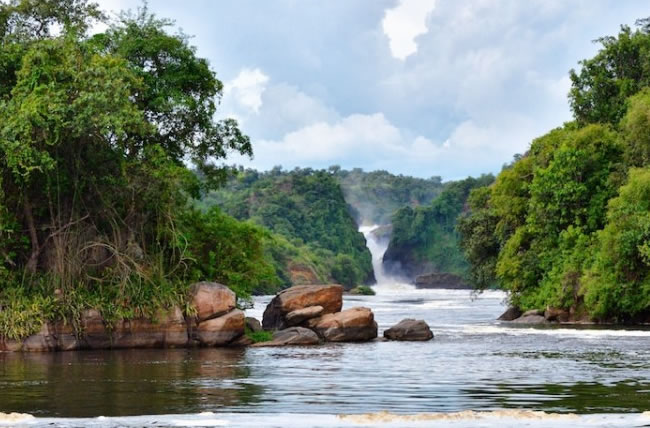
Murchison Falls National Park is home to one of the most powerful waterfalls in the world, the Murchison Falls. These falls make the park unique from the rest and are the main reason why the park is famously visited by a lot of visitors.
The park is found in the northwestern region of Uganda about 234 kilometers from Kampala. Murchison Falls National Park is also a wildlife hub for Uganda because it has over 144 mammals that can be spotted while on different activities like game drives in the park. The park also harbors 51 reptiles and about 450 bird species that live in the 3,893 square kilometer area of the park.
Background of Murchison Falls National Park
Murchison Falls National Park was at one time known as Kabalega National Park named after the then King of Bunyoro Kingdom Omukama Kabalega. The park is the oldest national park in Uganda after it was established in 1952 by the then British colonial government.
Murchison Falls National Park is vast as it covers four districts, Buliisa, Masindi, Kiryandongo and Nwoya. The park was once located on one side of the Victoria Nile until it was extended to the other side of the river after a tsetse fly breakout in the area and locals were forced to evacuate.
Sir Samuel Baker and his wife Florence Baker visited the park area and were amazed by the force of the waterfalls and named the falls Murchison Falls. They named the falls after the president of the Royal Geographic Society Rodrick Murchison. The years that followed after independence in the park region were not secure. The park was invaded more frequently and a lot of poaching took place leading to the extinction of some animals like rhinos from the park. However, the park has regained security and can be visited at any time of the year.
What are some of the attractions in Murchison Falls National Park? What to see in the park?
Murchison Falls National Park has a lot of things to see that range from wildlife species to bird species, and flora. The following are some of the things to expect while in Murchison Falls National Park.
Murchison Falls
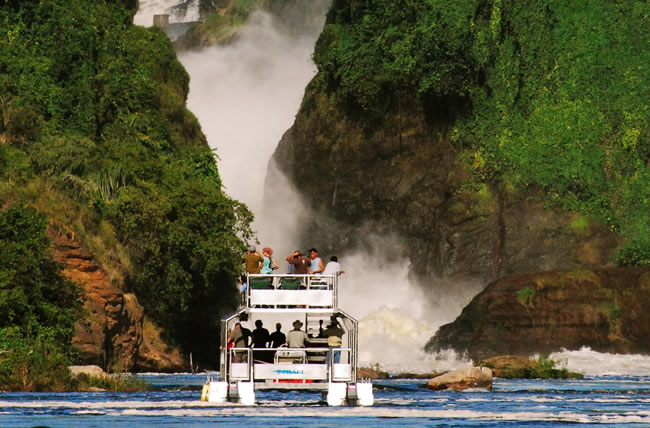
The park is famously known for hosting the Murchison Falls and it is the main attraction in the park. Murchison Falls ranks as the world’s strongest waterfall located in Murchison Falls National Park. This powerful force of nature is located on the Victoria Nile, a tributary of the River Nile that bisects the park into two. Murchison Falls was formed as a result of a powerful battle between the water and the rock walls of the Rift Valley. Water passing through a thin space between the rocks moves speed fast over the wall of the Rift Valley rock and pours in a small pool at the bottom of the Rift Valley rock at some terrible speed thus forming the Murchison Falls. This constant battle of the water and the rock walls creates a roar that can even be heard over a mile away from the waterfall.
Wildlife species
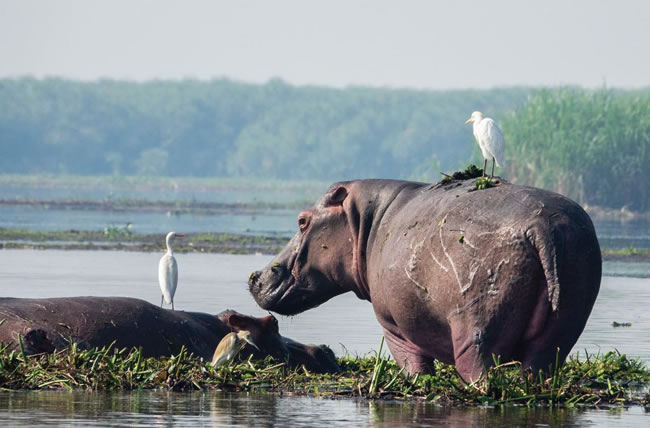
Murchison Falls National Park is home to a large sum of wildlife species that range from mammals to reptiles and more. The mammals in the park are of two types, carnivores and herbivores. The park is also home to the big four of the big five animals such as lions, leopards, buffaloes and elephants.
There are over 51 reptiles and 144 mammals that include lions, leopards, hartebeest, Ugandan kob, Nubian giraffe, Bohor reedbuck, elephants, warthogs, waterbucks, hippos, buffaloes, and crocodiles among others. All these animals can be spotted while on a game drive or a boat cruise on the Victoria Nile.
Bird species
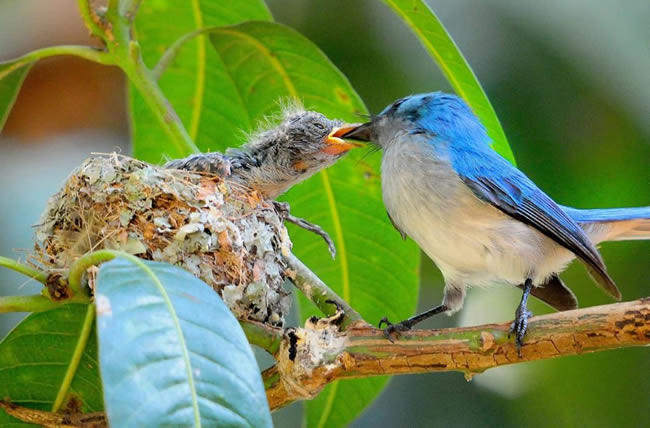
The park is well-designed with different vegetation zones and ecosystems and these offer the perfect home for the birds. Murchison Falls National Park is home to over 450 bird species that vary from the resident and migratory birds to the Albertine endemic birds. These birds can be spotted any time of the year, let it be the dry or wet seasons.
The following are some of the bird species you can expect to see in the park, Yellow-fronted tinkerbird, Long-tailed nightjar, Long-toed lapwing, Black-billed barbet, Rock pratincole, Giant kingfisher, Abyssinian ground hornbill, Senegal thick-knee, Black-headed lapwing, Denham’s bustard, Red-winged grey warbler, African darter, Standard-winged nightjar, Blue-headed coucal, Swamp flycatcher, Grey-headed kingfisher, Piapiac and many others.
Primate species
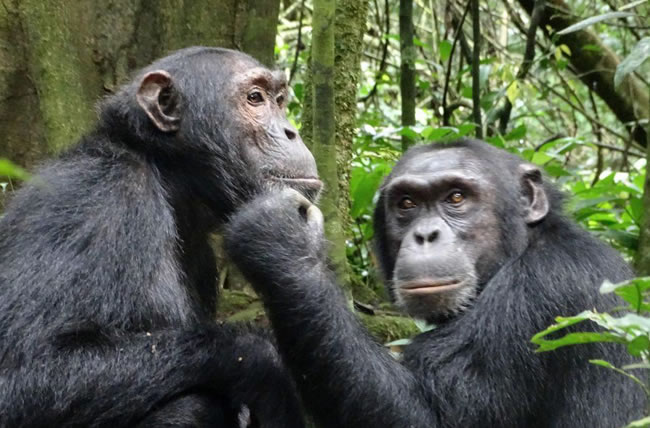
Murchison Falls National Park is also home to primate species like chimpanzees, olive baboons, vervet monkeys, black and white colobus monkeys, red-tailed monkeys and blue monkeys among others. These primates are located in the Kaniyo Pabidi and Budongo forests. These forests harbor close to over 600 primate species and they can be tracked any time of the year.
These primate species can be spotted while on a trekking experience in their habitats that is Budongo and Kaniyo Pabidi forests. Tracking these primate species gives you a chance to get close to them as they go by with their usual activities of the day.
What are the activities offered in Murchison Falls National Park? Things to do in the park.
The park has a wide range of activities to pick from and these activities can be done all year round. Let us dive into some of these activities offered in Murchison Falls National Park.
Game drive
Game viewing or game drive is the major tourist activity in the park. A game drive refers to the activity of viewing or spotting wild animals or the game roaming out in the wild in the safety and comfort of your vehicle. During game viewing, you will be sure to spot wildlife species like the big four animals like lions, leopards, elephants, and buffaloes. You will also spot animals like hartebeests, Uganda kobs, Nubian giraffes, spotted hyenas, warthogs, waterbucks, reedbucks and more.
Game drives in Murchison Falls National Park take place in two sessions, in the morning and afternoon. Be sure that you will have a good time once you take on a game drive in the park.
Boat cruise
A boat cruise involves going on a motorized boat ride on the Victoria Nile on a quest to discover the hidden treasures of the aquatic life in the park. A boat cruise is the best way to view different animal species like crocodiles and hippos that spend much of their time in water and on the shores busking in the sun.
During the dry season, most of the wildlife species tend to concentrate on the shores of the Victoria Nile for a drink and cool off. Take on a boat cruise experience on the river and you will marvel at the number of animals that flock to the shores of River Nile.
Bird watching
This activity is very common and considered a major activity as well because the park is an important birding area. This is because it harbors a large number of over 450 bird species and with this much number of birds, it is surely a paradise for birders. The activity of birding or bird watching involves walking in the park with the guidance of a professional and experienced ranger on a search for bird species.
This activity of birding can be done either for research purposes or leisure. It also takes place along designated birding spots in the park such as Budongo Forest, Kaniyo-Pabidi Forest among others.
Chimpanzee Trekking
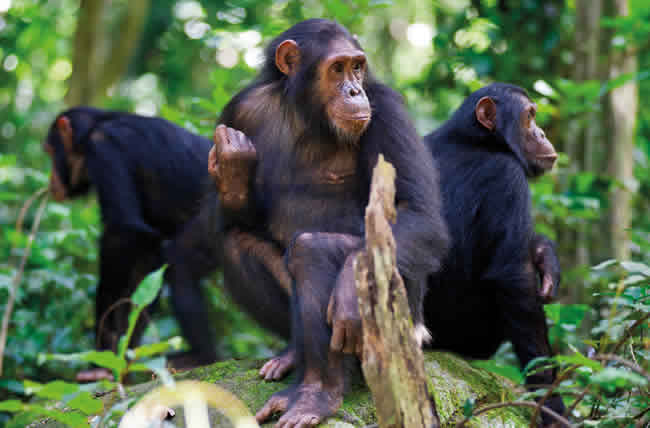
Murchison Falls National Park is blessed with a large population of about 600 primate species. The chimpanzees are the highly anticipated primates by visitors. The chimpanzees are only located in the forests of Budongo and Kaniyo-Pabidi and also other primate species live there too.
Chimpanzee trekking involves walking through the forests in search of the chimpanzees to spot them in their natural habitat. After the chimpanzees have been sought, you will be given an hour with them.
The process of trekking is challenging but adventurous as you can spot other primates like olive baboons, vervet monkeys, blue monkeys black and white colobus monkeys and many others swinging on trees. Chimpanzee trekking is also done in two sessions, morning and afternoon.
How to get to Murchison Falls National Park? Accessibility to the Park
The park is about 234 kilometers from Kampala and this means it can take you over 4 hours to get there. This depends on the gate you are using but the Masindi gate is the closest gate when coming from Kampala. Accessibility to the park was made very well because of the development of both the road and air networks. Traveling by road is the cheapest and most popular way to get to the park.
Traveling by air is the quickest way to get to the park and can take only an hour to land on one of the airstrips in the park from Entebbe airport. These airstrips are located in different regions of the park. Pakuba and chobe airstrips are the most common in the park. Murchison Falls National Park can be accessed by both air or road transport.
Where to stay in Murchison Falls National Park? Accommodation facilities in the park.
Accommodation is a crucial factor when commencing a safari adventure in Murchison Falls National Park. The park is blessed with several facilities located both in the park and outside the park. These accommodation facilities range from luxury, midrange to budget.
The accommodation facilities in the park are highly liked by many visitors as they give a different feel to the air, especially at night when listening to the calls and sounds of animals and also the roar of the Murchison Falls. Some of the facilities include Red Chili Rest Camp, Baker’s Lodge, Sambiya River Lodge, Chobe Safari Lodge and many more.
What is the best time to visit Murchison Falls National Park?
Murchison Falls National Park is a very busy park especially in the dry season in the months of December to February and June to September as it records a significant number of visitors higher than the wet season.
During the dry season, there are various activities to do in the park like game drives and boat cruises because navigation in the park is quite easy. The wet season also presents a better chance to do some activities like birding since some bird species can only be spotted in the wet months.
Therefore, the park is open to visitors all year round but different activities are best done in the different seasons of dry and wet seasons. However, due to the large number of visitors to the park in the dry season, it qualifies as the best time to visit the park.