
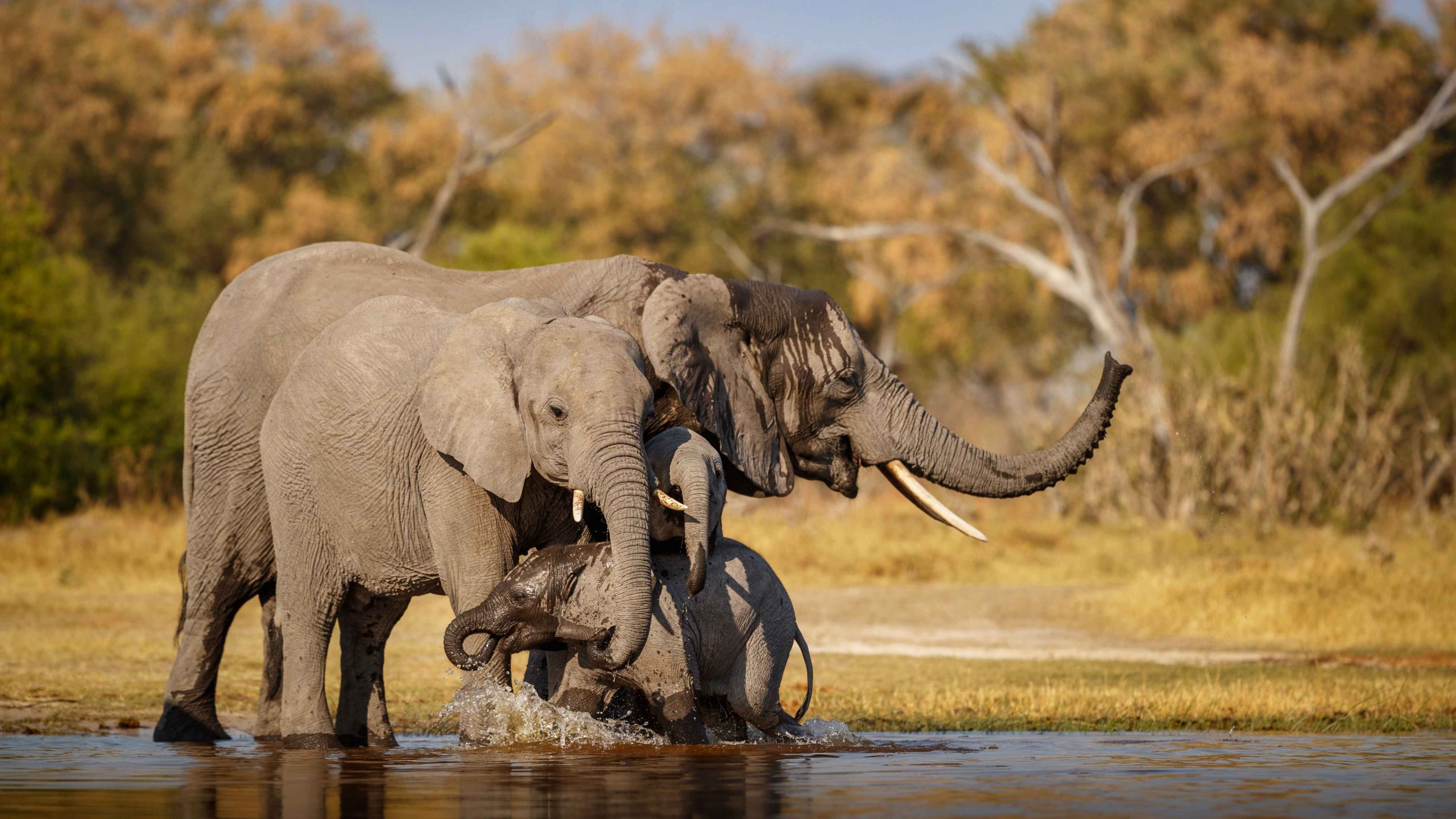
Have you ever dreamt of standing face-to-face with the largest land mammal, hearing its deep rumble echo across the savannah, or watching it gently splash water under the African sun?
Elephants in Uganda make this dream not only possible but magical and true. Often overlooked by mainstream safari seekers, Uganda is a wonderland for elephant lovers, offering rare and up-close experiences with the largest land mammals on Earth.
At Mango Safaris Africa, we understand these fantasies and have crafted unique safari packages that let you see the mighty elephants as close as you wish, turning your imagination into an unforgettable reality.
From the national parks in the heart of East Africa to riverbanks and forest edges, elephants in Uganda are always inviting you for an experience in their scenic and untouched landscapes. And if you’re planning a safari and wondering where to see elephants in Uganda, this guide answers it all.
Elephant Species in Uganda
Many people grow up recognizing elephants simply as “elephants” or majestic giants with trunks, tusks, and towering strength. Few realize that there are actually two distinct species in the wild, and Uganda is one of the rare countries where both can be seen.
For the mindful traveler, knowing the difference can help you appreciate the unique habitats Uganda protects and the conservation challenges each species faces. It’s not just about seeing an elephant, it’s about understanding what kind of elephant you’re seeing, and why that matters.
In Uganda, you can encounter;
- Savannah Elephants. These are the larger and more common species, sighted in open grasslands and savannah parks. They have larger tusks, wider ears, and often move in visible herds across open terrain, offering lovely viewing opportunities during game drives.
- Forest Elephants, which are smaller, more elusive, and less social, inhabit the dense tropical rainforests of the National Park. They have straighter tusks, rounded ears, and they can move through thick vegetation, making sightings rarer but thrilling for those lucky enough to see them.
Elephant Population in Uganda
The population of Elephants in Uganda is a true story of conservation! Why? Between the 1970s and 1980s, Uganda faced rampant poaching which pushed Elephant numbers to the brink, with fewer than 2000 individuals remaining across the country.
However, thanks to the highly improved wildlife protection efforts by UWA, the numbers have been steadily rebounding.
Uganda now hosts over 7000 elephants; all spread across its national parks. In fact, these efforts deserve recognition because they signal a positive trend for eco-tourism, enabling travelers to observe thriving herds in their natural habitats.
With Mango Safaris Africa, each elephant sighting is more than a photo opportunity but a symbol of resilience, protection, and the power of sustainable tourism.
Where to See Elephants in Uganda?
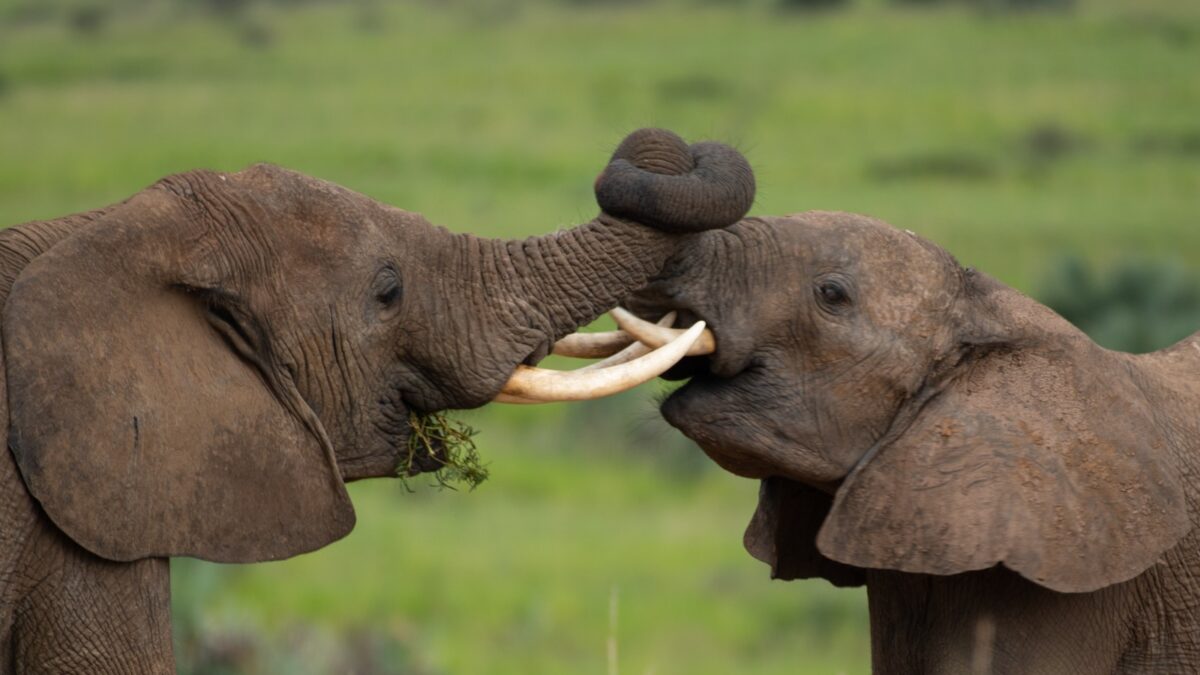
Uganda offers the most diverse and exciting elephant viewing experiences in all of East Africa. The top 5 out of 10 national parks in Uganda offer excellent opportunities to observe elephant herds displaying their health, from the sweeping savannahs to the dense tropical forests. Here are the best places to see Elephants in Uganda.
Queen Elizabeth National Park. This park has become the most popular spot for elephant sightings in Uganda. The elephants are often seen roaming the Kasenyi plains, grazing along the Mweya peninsula, or even cooling off at the Kazinga Channel during your boat safaris with Mango Safaris Africa.
Murchison Falls National Park, Uganda’s oldest and largest park, is home to a large herd of elephants often seen along the Victoria Nile, near Para and the Buligi Game Tracks. The backdrop of the world’s most powerful waterfall always enhances the experience, making it even more enjoyable.
Kidepo Valley National Park, though most known for its remote wilderness, offers an intimate and scenic elephant encounter in an untouched landscape. Herds are often seen near Narus Valley, mostly during the dry season. Book your summer trips with Mango Safaris Africa for a better experience.
Kibale National Park. Although it’s best known for chimpanzee trekking, Kibale NP also hosts forest elephants, which are more elusive. Still, these elephants are sometimes seen near forest edges, feeding on the Marula trees.
Bwindi Impenetrable National Park is primarily known for being home to the world’s largest gorilla population; however, it is also home to a small population of Elephants. here, sightings are rare due to the thick vegetation; however, tracks and signs are common, which offer a thrilling sense of their presence while on a gorilla trekking experience
Fun facts about Elephants in Uganda
- They spend most of their day eating.
- An adult elephant spends 16 hours a day eating, eating up to 150-200kg of vegetation
- Elephants love water; they’re often seen swimming and spraying water on themselves to cool off and protect their skin from insects and the sun.
- Their trunks are multi-tools with over 40,000 muscles. They can lift a tree or pick up a single blade of grass.
- Elephants have an excellent memory, remembering everything, including their water sources, migration routes, and humans who treated them kindly or cruelly
- Elephants also get drunk after feeding on an unrealistic number of fermented fruits from the Marula tree (Sclerocarya birrea)
Spending a day in the wild, you might observe them socializing, bathing, feeding, or even mock charging, creating an unforgettable sight, and surely a day with Elephants in Uganda is not just a Safari, I believe it’s a deep connection with one of nature’s most gentle, intelligent giants
Why choose Uganda for Elephant Safaris?
Unlike crowded circuits in other destinations, Uganda’s parks are less congested, allowing an intimate wildlife encounter of Africa’s most authentic and diverse elephant experience.
What makes it more special and meaningful is Uganda’s stronger focus on community-based tourism and conservation, where your visit directly supports the protection of these gentle Giants and the community that lives along with them.
Combine this with a beautiful landscape, biodiversity, and the warmth of the hospitable Ugandans, and you have every reason to choose Uganda for your next elephant Safari.
When is the best time to see Elephants in Uganda?
The dry seasons from June to September and December to February turn out to be the best months for elephant viewing, as animals gather around water sources, and vegetation is thinner for better visibility
What to carry on a Safari in Uganda?
- Binoculars and cameras with a zoom lens
- Lightweight, neutral-colored clothes
- Water bottle
- Field guidebook(optional)
- Rain jacket, especially in forest parks
- Sunscreen and repellent
Who to take you?
For a smooth experience, travel with trusted operators like Mango Safaris Africa. Their expertise guarantees safe and adaptable tours tailored to your interests. Contact us at info@mangosafarisafrica.com or click here for comprehensive full packages
Conclusion
Elephants in Uganda are more than just safari icons; they’re guardians of Uganda’s rich biodiversity. Whether you’re passing by them on a boat cruise in Queen Elizabeth or watching a family across the tracks of Murchison, these encounters evoke something deep inside. Uganda not only displays elephants; it also connects you to them through Mango Safaris Africa.