
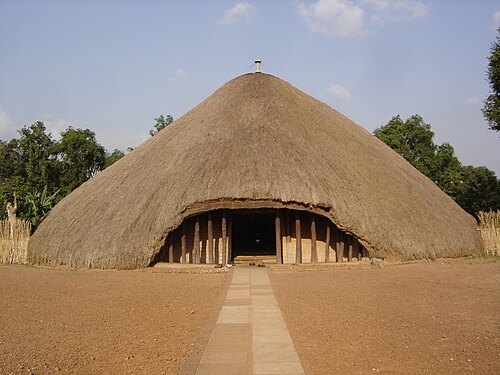
When you hear the word “tomb,” you might think of a quiet, somber place perhaps a grave hidden away from everyday life. But the Kasubi Tombs in Kampala, Uganda, offer something far more powerful.
Here, history doesn’t just sit behind a plaque or inside a museum, it lives, breathes, and continues to shape a people.
Imagine standing on sacred ground where kings were once crowned and later laid to rest, where cultural traditions are still practiced with reverence, and where every footstep echoes with stories of legacy. That is the soul of Kasubi, and it should definitely be on your to do list on a Kampala Tour.
A Living Connection to Royal Legacy
The story of the Kasubi Tombs begins in 1882, when Kabaka Muteesa I, the 35th king of Buganda, constructed his royal palace on Kasubi Hill. This wasn’t just a political center; it was a deeply spiritual location, chosen carefully by the king. Upon his death in 1884, he requested to be buried at the site, a decision that transformed it into a royal tomb and a sacred space.
Since then, the tombs have become the final resting place for four Buganda kings: Muteesa I, Mwanga II, Daudi Chwa II, and Edward Muteesa II, Uganda’s first president and a unifying figure in both the kingdom and the modern nation. These kings were central to Buganda’s social, political, and spiritual development, and their presence at Kasubi remains profoundly symbolic. Their burial here not only honors their memory but anchors the continuity of the kingdom.
A Space of Ritual and Tradition
Before reaching the central tombs, visitors pass through a traditional gate and encounter Ndoga Obukaba, a small house that holds the royal drums; an essential symbol of kingship in Buganda. These drums are used during important ceremonies, and only men are permitted to enter this house, reflecting gender-specific customs passed down for generations.
The tombs are under the care of a Nalinya, a high-ranking royal female custodian, chosen from among the clan members. She oversees the rituals, preservation, and spiritual sanctity of the site, assisted by members of the royal family and caretakers. This reinforces the importance of women in spiritual guardianship, even within a patriarchal monarchy.
Within the compound, traditional houses still accommodate royal widows and other family members. These women have specific duties, including caring for the graves of the kings and upholding rituals that maintain the spiritual energy of the site. The royal family’s continued presence ensures the tombs remain a living heritage rather than a forgotten relic.
Architecture with a Soul
At the heart of the site stands the Muzibu Azaala Mpanga, the main tomb structure and a masterpiece of traditional Ganda architecture. This vast, circular building is made almost entirely of organic materials; thatch, wooden poles, reeds, and bark cloth. The construction process itself is deeply ceremonial, with craftsmen using age-old techniques passed down through oral tradition.
The structure’s design is rich in symbolism. The circular shape represents continuity, unity, and eternity key values in Buganda cosmology. Inside lies the Kibira, the central chamber where the kings’ tombs are located. Shrouded in bark cloth, this space is restricted to certain spiritual custodians, heightening its sacredness and the mystery that surrounds it.
Surrounding the Muzibu Azaala Mpanga is a carefully maintained environment, with trees planted as a living fence. These not only protect the site from land encroachment but also reinforce a deep respect for nature, which is integral to traditional Ganda belief systems.
Kasubi as a Living Cultural Space
Kasubi is not just a site for remembrance; it is a place of active spiritual and communal engagement. Locals and visitors alike come here seeking guidance from ancestral spirits, blessings for life events, or simply a deeper connection to their identity. This sacred energy transforms Kasubi into more than a tourist attraction, it is a space of healing, reflection, and pride.
The site also serves as an educational center, especially for young Ugandans eager to learn about their heritage. School groups, university researchers, and cultural enthusiasts are frequent visitors. For those unfamiliar with Buganda’s rich traditions, a visit to Kasubi provides a powerful introduction to Uganda’s largest kingdom and its influence on national identity.
Tragedy and Resilience
In March 2010, tragedy struck when a devastating fire destroyed the Muzibu Azaala Mpanga. The fire’s cause was never officially determined, but the emotional and cultural impact was immediate and profound. The destruction felt like a blow not just to a building, but to the souls of people.
However, from this tragedy arose an extraordinary story of resilience. Reconstruction began swiftly, with traditional artisans, elders, and international experts collaborating to restore the site with cultural authenticity. The restoration wasn’t merely architectural, it was spiritual, emotional, and communal. It reaffirmed how much the site matters, not just to Buganda, but to Uganda and the wider world.
Global Significance
Recognized as a UNESCO World Heritage Site in 2001, Kasubi is one of the few surviving examples of large-scale traditional African architecture. Its nomination was based on both its historical importance and its unique craftsmanship. It stands among a small group of African sites that are not just historic but spiritually active and still integrated into daily cultural life.
For tourists, Kasubi offers an experience unlike any other. It’s a chance to witness a proud, living tradition, to understand the cultural fabric of Buganda, and to reflect on how heritage shapes the future. Guided tours, usually led by knowledgeable custodians, provide deep insights into the symbolism, stories, and societal roles embedded in the site.
A Shared Responsibility
Preserving Kasubi is not solely the duty of the royal family or government. It requires collective responsibility. Visitors should approach with respect, dress modestly especially women and observe cultural protocols. Educational institutions can include it in their curricula, and local communities can take pride in promoting and protecting it. Every Ugandan, and every visitor, has a role to play in safeguarding this treasure.
In Conclusion
The Kasubi Tombs are more than a historical site, they are the heartbeat of a kingdom, a bridge between generations, and a proof to the resilience and beauty of Buganda’s culture. Visiting Kasubi is not just a look into the past; it is an invitation to connect with something timeless.
Whether you’re a history lover, a spiritual seeker, or a curious traveler, this sacred site belongs on your Kampala itinerary. By learning, sharing, and protecting it, we help keep the soul of a nation alive for generations to come. Just book with us and we take you there.